digital design communication
AutoZone
During my E-Commerce Digital Design Internship at AutoZone, I focused on improving the digital shopping experience and streamlining customer support. My work spanned responsive interface design across mobile, tablet, and desktop, and a redesign of Product Detail Pages (PDPs) to improve usability and product visibility. The project featured here is a Rewards chatbot I designed and pitched to AutoZone leadership, built to reduce call volume and give loyalty customers faster, self-service access to their rewards. Some work remains confidential; what's shown here is either public or sufficiently anonymized.
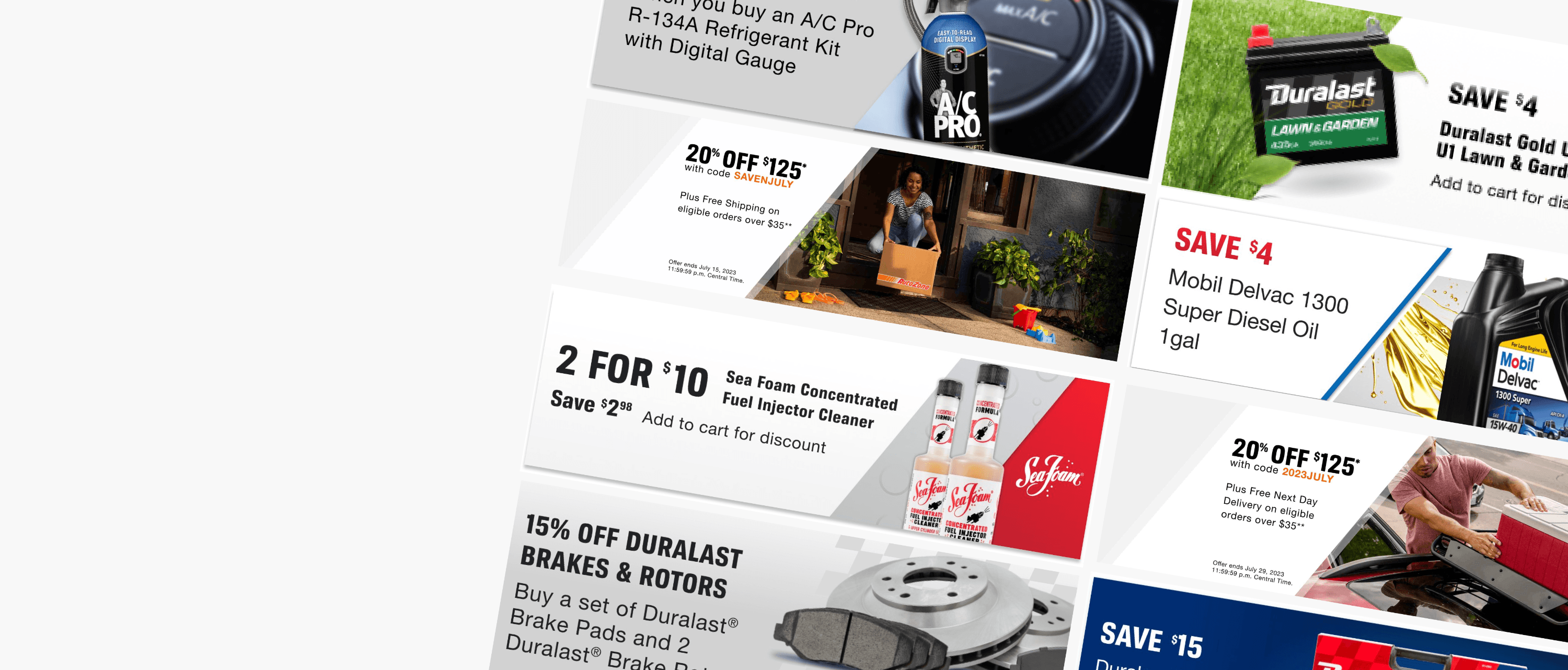
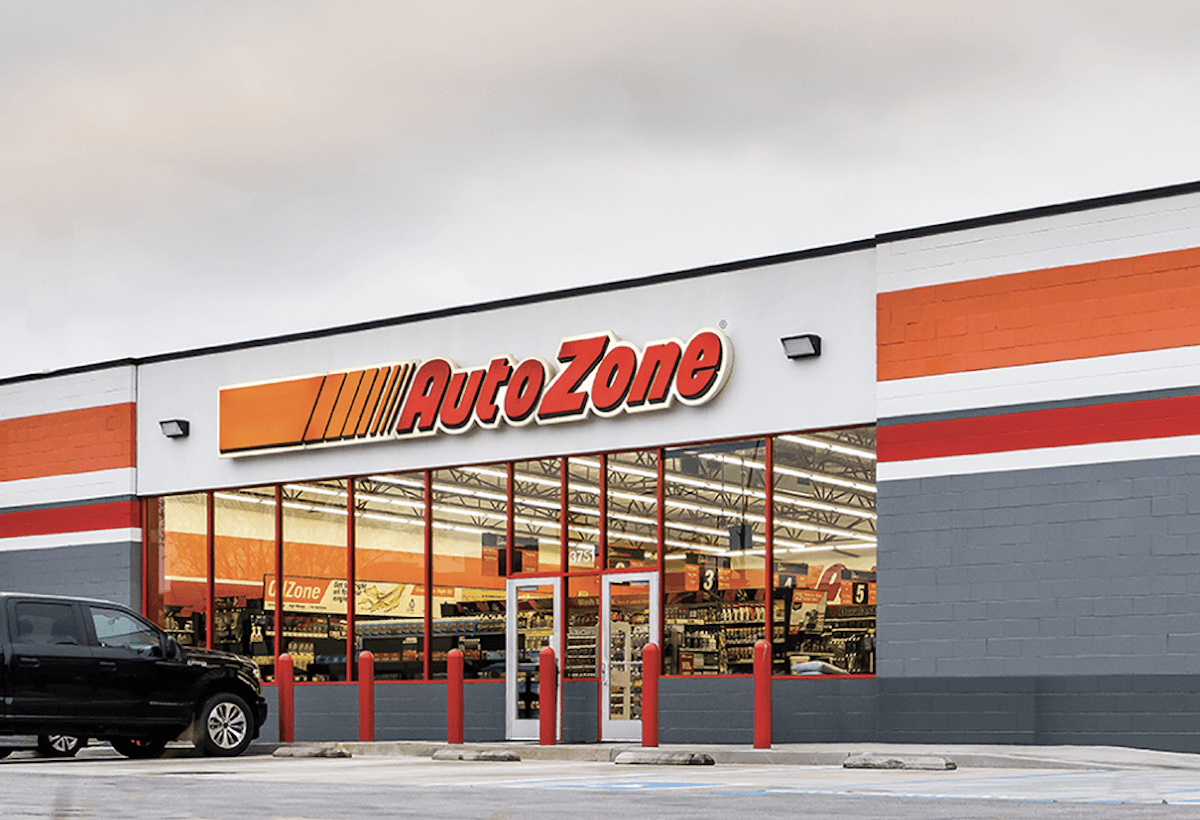
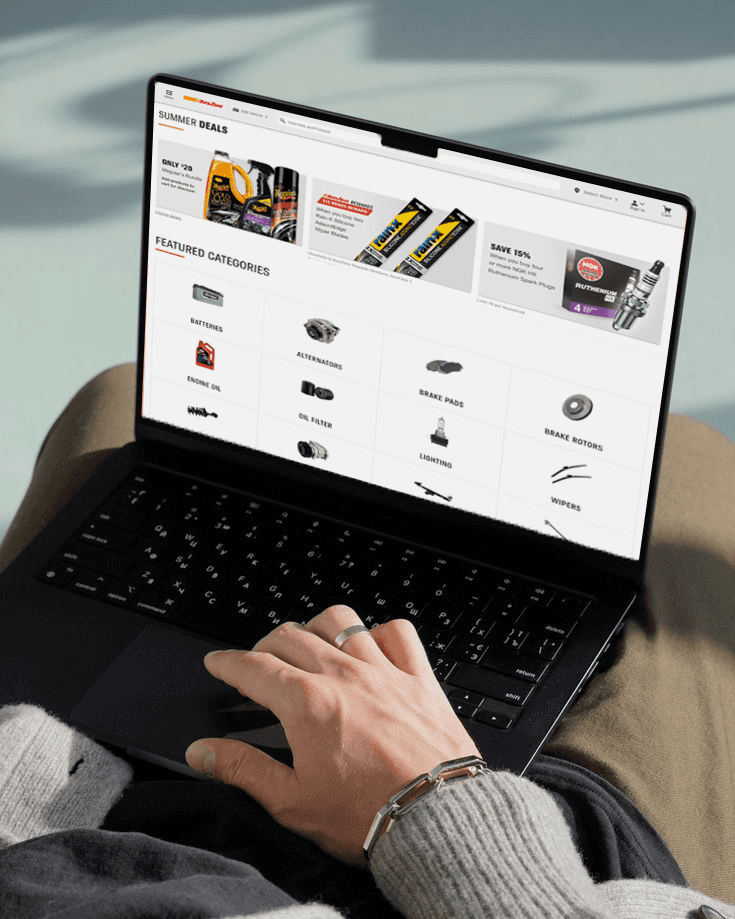
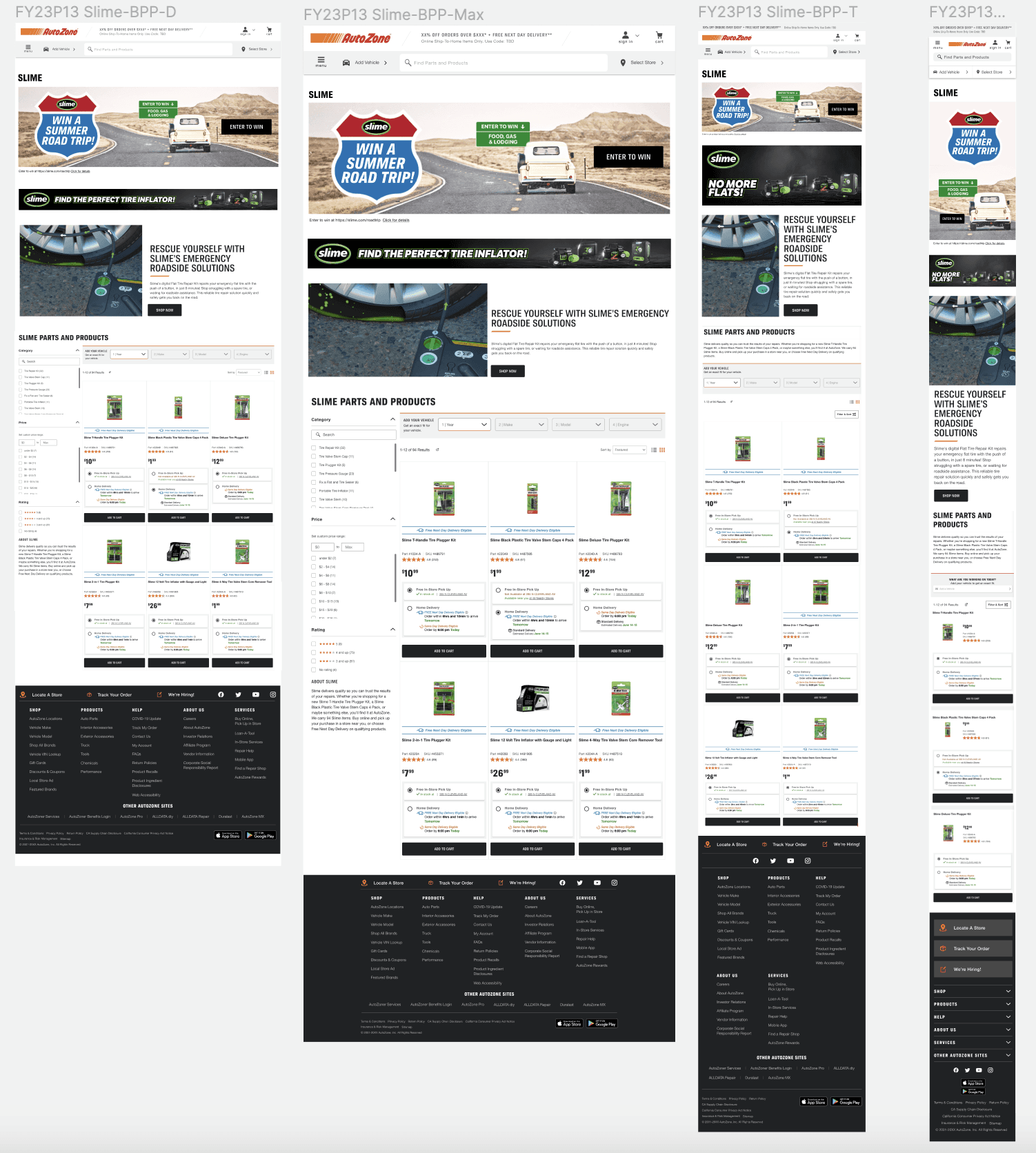
Over the course of the internship, I designed responsive digital interfaces across mobile, tablet, and desktop, contributing to a more consistent and intuitive shopping experience site-wide. I also worked on a redesign of Product Detail Pages on AutoZone.com, focused on improving product visibility and reducing friction in the purchase path.
The most significant project I took on independently was the Rewards chatbot featured below. AutoZone's loyalty program is central to its customer relationship, but it was quietly creating friction. Customer service representatives were absorbing hundreds of repetitive rewards inquiries every quarter: balance checks, missing credits, account resets. These were low-complexity tasks consuming high-value support time. I saw an opportunity to design a solution that served both sides, giving customers faster answers and giving CSRs their time back for cases that actually needed them.

AutoZone Rewards Chatbot: Improving Customer Experience
As an eCommerce Digital Design Intern at AutoZone, I identified a recurring operational problem: customer service representatives were spending hundreds of hours each quarter handling repetitive rewards inquiries that didn't require human support. I researched the highest call and email drivers, interviewed CSRs from the Mexico call center, and designed a Rewards chatbot in Dialogflow to automate those touchpoints. The solution was scoped to reduce call volume, lower Average Handle Time, and give loyalty customers faster access to their rewards information without picking up the phone. I presented the full concept and projected ROI to AutoZone leadership as my final intern pitch.
AutoZone Rewards Chatbot: Improving Customer Experience
As an eCommerce Digital Design Intern at AutoZone, I identified a recurring operational problem: customer service representatives were spending hundreds of hours each quarter handling repetitive rewards inquiries that didn't require human support. I researched the highest call and email drivers, interviewed CSRs from the Mexico call center, and designed a Rewards chatbot in Dialogflow to automate those touchpoints. The solution was scoped to reduce call volume, lower Average Handle Time, and give loyalty customers faster access to their rewards information without picking up the phone. I presented the full concept and projected ROI to AutoZone leadership as my final intern pitch.
Background & Problem
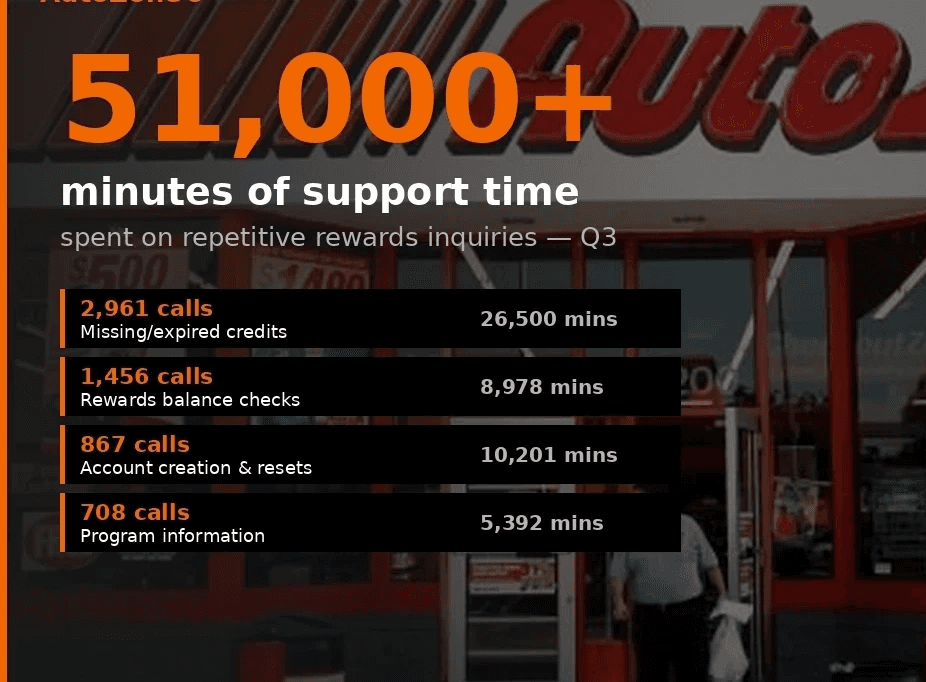
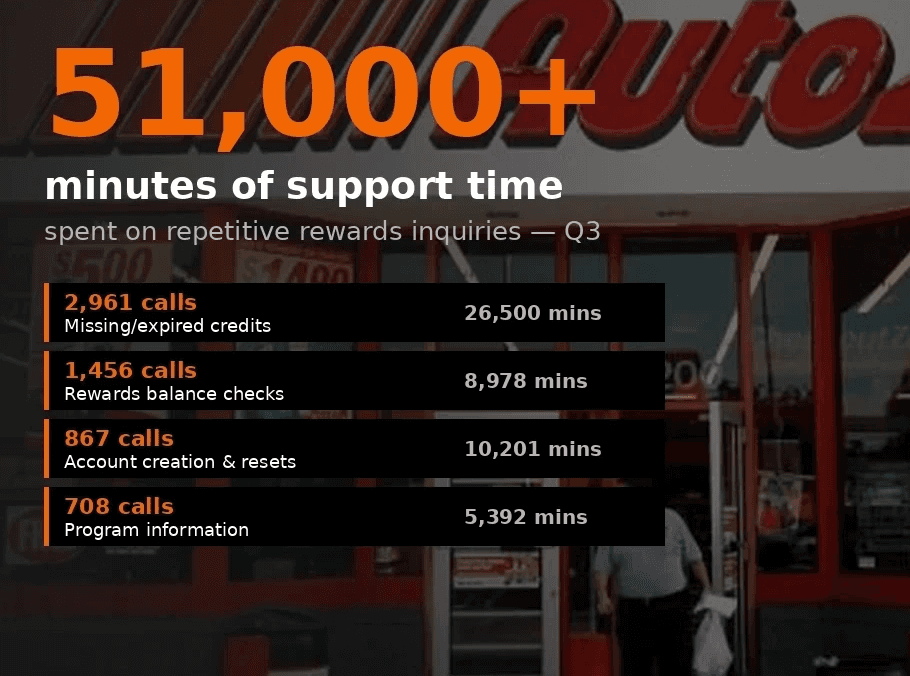
AutoZone's CSRs were flooded with repetitive rewards inquiries that didn't require human judgment. Q3 data revealed four high-volume pain points consuming over 51,000 mins of support time:
Missing or expired credits: 2,961 calls (26,500 mins)
Rewards balance checks: 1,456 calls (8,978 mins)
Account creation, linking & resets: 867 calls (10,201 mins)
Rewards program information: 708 calls (5,392 mins)
These tasks were routine and repetitive, yet their volume created a bottleneck that consistently pulled CSRs away from complex cases, driving up AHT, extending wait times, and signaling a clear opportunity for automation.
AutoZone's CSRs were flooded with repetitive rewards inquiries that didn't require human judgment. Q3 data revealed four high-volume pain points consuming over 51,000 mins of support time:
Missing or expired credits: 2,961 calls (26,500 mins)
Rewards balance checks: 1,456 calls (8,978 mins)
Account creation, linking & resets: 867 calls (10,201 mins)
Rewards program information: 708 calls (5,392 mins)
These tasks were routine and repetitive, yet their volume created a bottleneck that consistently pulled CSRs away from complex cases, driving up AHT, extending wait times, and signaling a clear opportunity for automation.
Why a Chatbot?
The customer was already waiting, with an average response time of over 9 hours for questions that should have taken seconds. With no on-site self-service option, AutoZone was routing low-complexity needs through a high-friction channel. The data made the case clearly: over 53,000 minutes of Q3 support time lost to four repeatable inquiry types. A chatbot was the tool to close that gap.
Checking missing or expired credits
Creating, linking, or resetting MyZone accounts
Checking rewards balances and program details
The customer was already waiting, with an average response time of over 9 hours for questions that should have taken seconds. With no on-site self-service option, AutoZone was routing low-complexity needs through a high-friction channel. The data made the case clearly: over 53,000 minutes of Q3 support time lost to four repeatable inquiry types. A chatbot was the tool to close that gap.
Checking missing or expired credits
Creating, linking, or resetting MyZone accounts
Checking rewards balances and program details
Research & Concept Validation
To validate the chatbot concept, I conducted interviews with two customer support representatives from AutoZone call centers in Mexico. Their insights confirmed the research direction:
Representatives identified missing rewards, account resets, and balance inquiries as the most frequent call drivers
Both believed a chatbot could resolve these inquiries faster, reducing customer hold times significantly
Automating routine requests would free CSRs to prioritize complex, high-touch cases that require human judgment
To validate the chatbot concept, I conducted interviews with two customer support representatives from AutoZone call centers in Mexico. Their insights confirmed the research direction:
Representatives identified missing rewards, account resets, and balance inquiries as the most frequent call drivers
Both believed a chatbot could resolve these inquiries faster, reducing customer hold times significantly
Automating routine requests would free CSRs to prioritize complex, high-touch cases that require human judgment

Understanding the Audience
Beyond the call data, the research pointed to a deeper behavioral pattern. Customers weren't calling because they wanted to, they were calling because there was no faster alternative.
With no on-site self-service option, AutoZone was forcing loyalty customers through a high-friction channel for low-complexity needs. The opportunity wasn't just operational efficiency, it was closing a gap in the customer experience that was quietly eroding satisfaction.
Beyond the call data, the research pointed to a deeper behavioral pattern. Customers weren't calling because they wanted to, they were calling because there was no faster alternative.
With no on-site self-service option, AutoZone was forcing loyalty customers through a high-friction channel for low-complexity needs. The opportunity wasn't just operational efficiency, it was closing a gap in the customer experience that was quietly eroding satisfaction.

Design Strategy
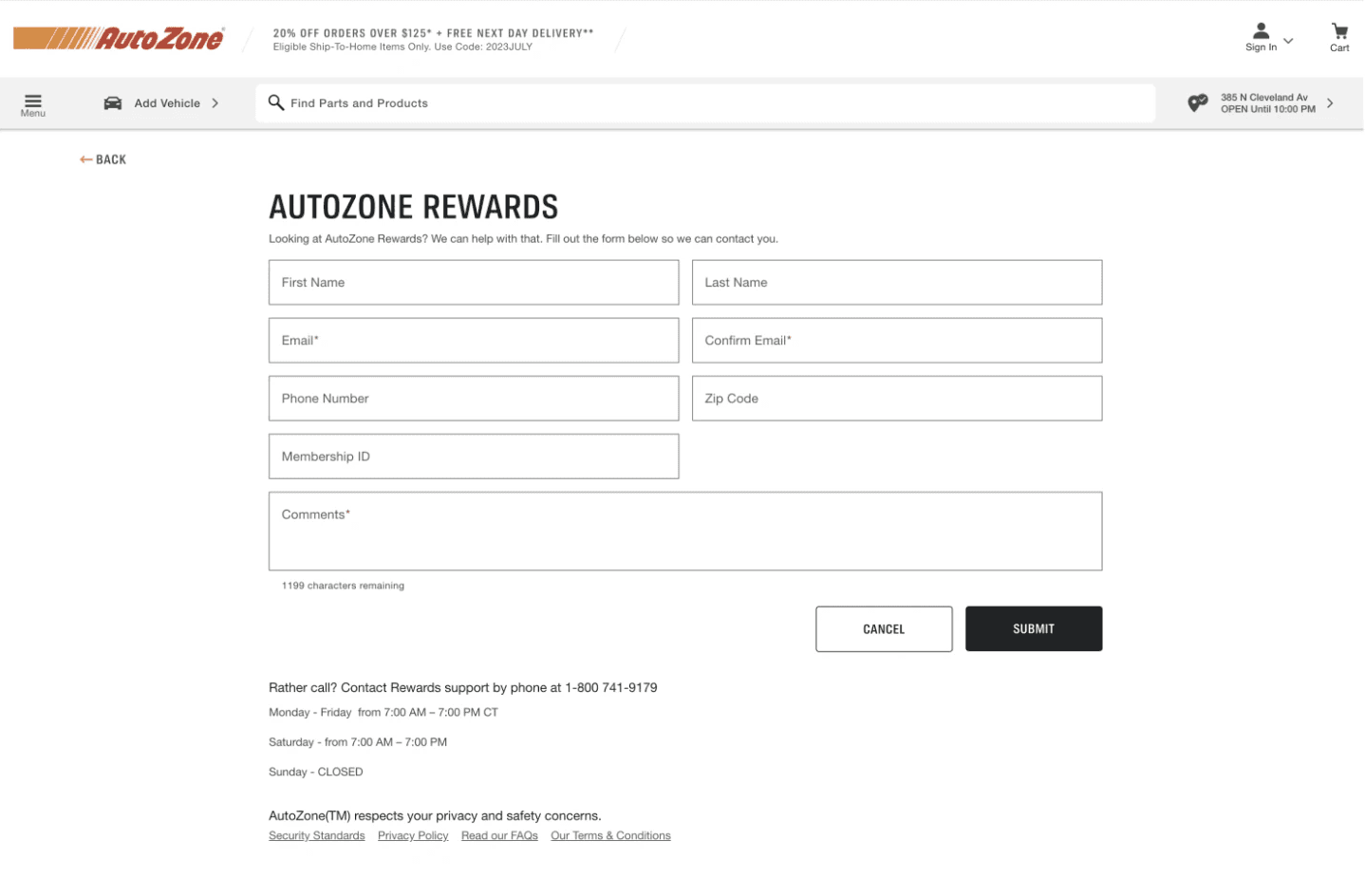
The rewards page required customers to submit a full contact form to resolve simple inquiries. The chatbot was scoped to sit directly on that page, replacing a high-effort process with a conversational interface that could retrieve the same information in seconds. Placement was driven by where the friction already existed, not where a chatbot would typically default to.
The rewards page required customers to submit a full contact form to resolve simple inquiries. The chatbot was scoped to sit directly on that page, replacing a high-effort process with a conversational interface that could retrieve the same information in seconds. Placement was driven by where the friction already existed, not where a chatbot would typically default to.
Feasibility & ROI
Designing a chatbot's scope and cost depends heavily on complexity. Basic builds can take weeks while more advanced systems span months, with costs ranging from a few thousand to tens of thousands of dollars. Building directly into AutoZone's website and customer service database kept this solution lean, avoiding unnecessary infrastructure changes or extensive team retraining.
With an average speed of answer of 9 hours and 18 mins, automating inquiries for 105 customers alone translated to approximately 58,653 mins (978 hours) of time saved, demonstrating measurable ROI before a full rollout.
Designing a chatbot's scope and cost depends heavily on complexity. Basic builds can take weeks while more advanced systems span months, with costs ranging from a few thousand to tens of thousands of dollars. Building directly into AutoZone's website and customer service database kept this solution lean, avoiding unnecessary infrastructure changes or extensive team retraining.
With an average speed of answer of 9 hours and 18 mins, automating inquiries for 105 customers alone translated to approximately 58,653 mins (978 hours) of time saved, demonstrating measurable ROI before a full rollout.
Concept Development & Iteration
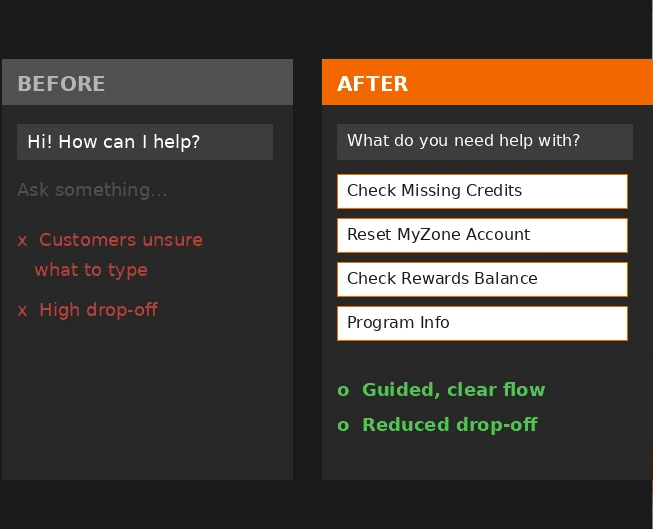
Early conversation flow simulation in Dialogflow revealed that open-ended prompts created ambiguity. Without guided options, customers were unsure how to phrase their requests, increasing the likelihood of drop-off. The interface was restructured around button-based responses mapped directly to the highest call drivers, reducing friction and improving flow completion. Scoping also required identifying which tasks the chatbot could not handle, as account merging and receipt requests required backend actions beyond what the bot could retrieve, establishing a clear boundary between automated and human-assisted support.
Early conversation flow simulation in Dialogflow revealed that open-ended prompts created ambiguity. Without guided options, customers were unsure how to phrase their requests, increasing the likelihood of drop-off. The interface was restructured around button-based responses mapped directly to the highest call drivers, reducing friction and improving flow completion. Scoping also required identifying which tasks the chatbot could not handle, as account merging and receipt requests required backend actions beyond what the bot could retrieve, establishing a clear boundary between automated and human-assisted support.
Design & Prototyping
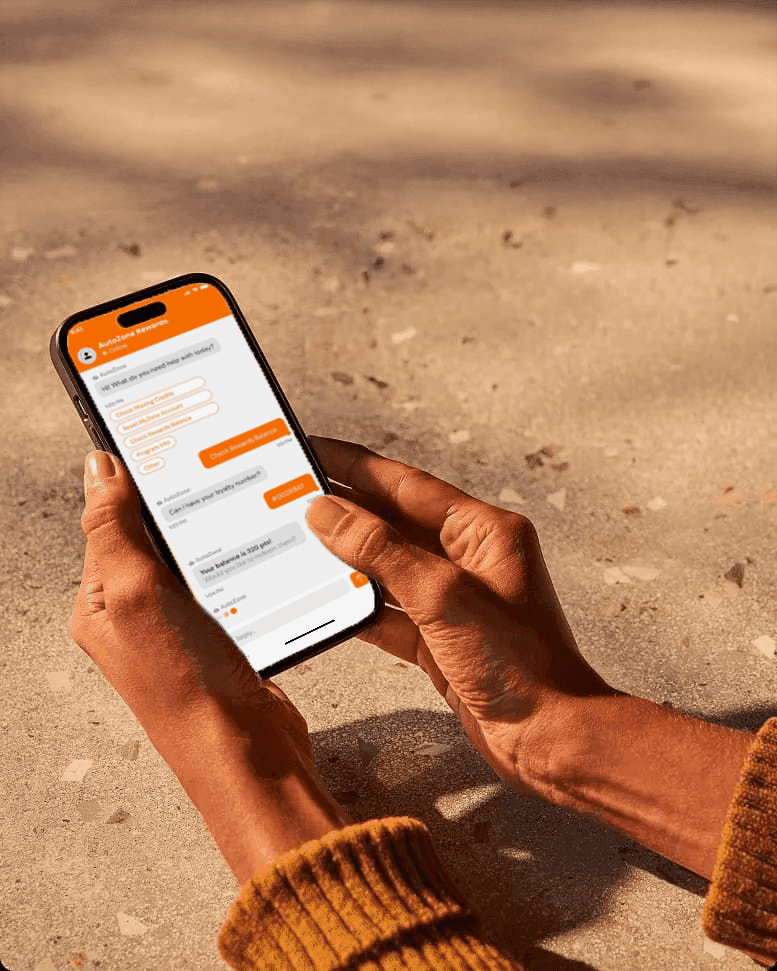
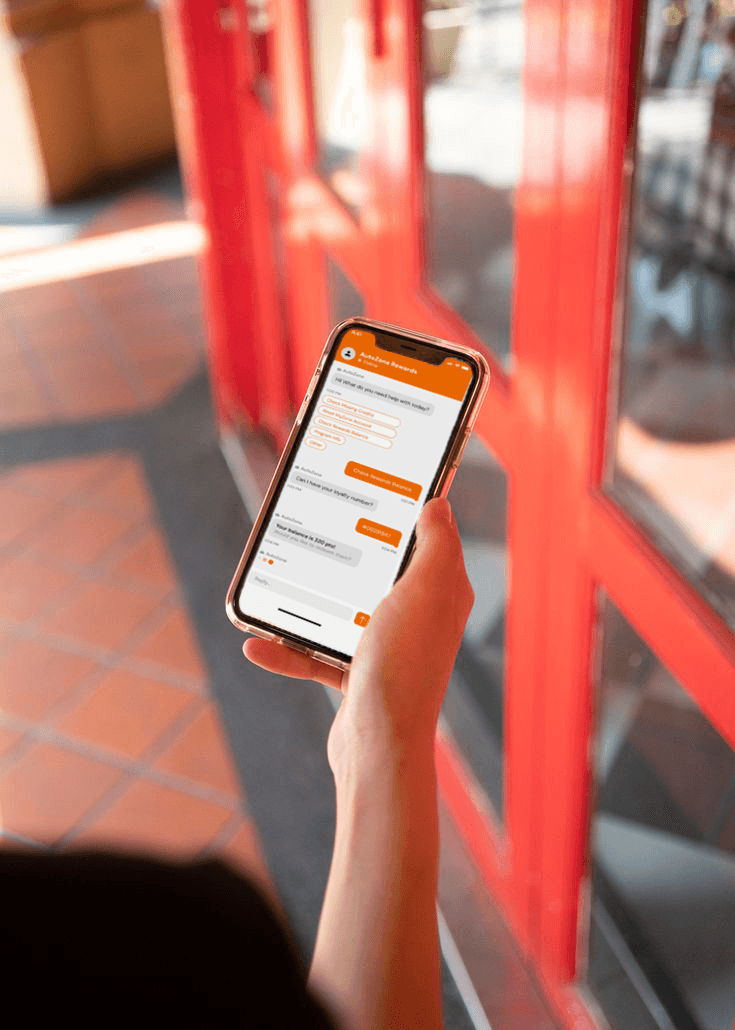
The chatbot was built to give loyalty customers self-service access to their rewards experience, covering point balances, offers, redemptions, account updates, and store locations.
Conversation flows were mapped in Dialogflow with intents tied to the highest call drivers:
"Provide your customer ID to check your points balance."
"Your balance is 320. Would you like to redeem them?"
Conversations were simulated to validate data retrieval and dialogue flow before scoping future integration via real-time API calls to AutoZone's backend, embedded directly in the loyalty section with a visible "Check your rewards" entry point.
The chatbot was built to give loyalty customers self-service access to their rewards experience, covering point balances, offers, redemptions, account updates, and store locations.
Conversation flows were mapped in Dialogflow with intents tied to the highest call drivers:
"Provide your customer ID to check your points balance."
"Your balance is 320. Would you like to redeem them?"
Conversations were simulated to validate data retrieval and dialogue flow before scoping future integration via real-time API calls to AutoZone's backend, embedded directly in the loyalty section with a visible "Check your rewards" entry point.
The chatbot was built to give loyalty customers self-service access to their rewards experience, covering point balances, offers, redemptions, account updates, and store locations. Conversation flows were mapped in Dialogflow with intents tied to the highest call drivers:
"Provide your customer ID to check your points balance."
"Your balance is 320. Would you like to redeem them?"
Conversations were simulated to validate data retrieval and dialogue flow before scoping future integration via real-time API calls to AutoZone's backend, embedded directly in the loyalty section with a visible "Check your rewards" entry point.
Results & Impact
The chatbot demonstrated measurable potential to transform AutoZone's customer service operation. Key outcomes from the final pitch:
Projected time savings of 51,073 mins (852 hrs) per quarter and 204,292 mins (3,404 hrs) annually
Reducing AHT through automation directly correlated to improved customer satisfaction scores
By automating the most repetitive, high-volume inquiries, the chatbot freed CSRs to focus on complex cases while giving customers faster, on-demand access to their rewards information.
The chatbot demonstrated measurable potential to transform AutoZone's customer service operation. Key outcomes from the final pitch:
Projected time savings of 51,073 mins (852 hrs) per quarter and 204,292 mins (3,404 hrs) annually
Reducing AHT through automation directly correlated to improved customer satisfaction scores
By automating the most repetitive, high-volume inquiries, the chatbot freed CSRs to focus on complex cases while giving customers faster, on-demand access to their rewards information.
Key Takeaways
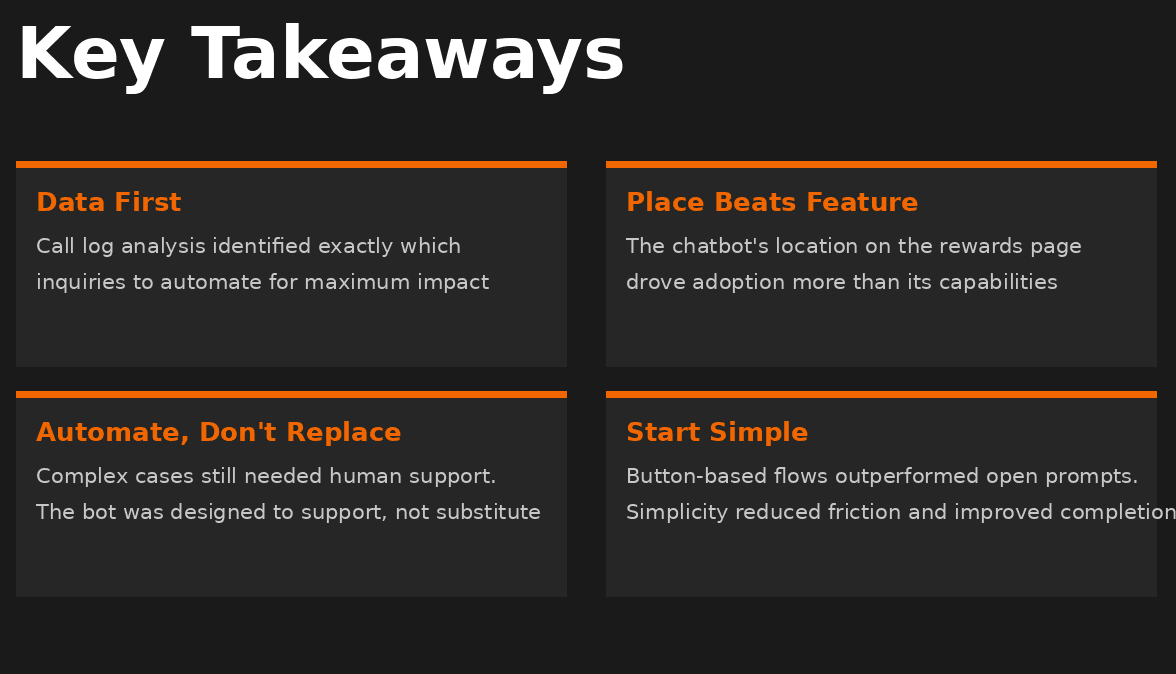
Start with the data. Call log analysis kept the solution focused on the highest-impact inquiries rather than trying to solve everything at once.
Place the solution where the friction already is. Embedding the chatbot on the rewards page made it a natural extension of the experience, not an afterthought.
Scope honestly. Simple bots take weeks; AI-powered systems take months. Knowing the difference shapes realistic recommendations.
Automation supports humans, it doesn't replace them. The chatbot handled volume. CSRs handled nuance.
Start with the data. Call log analysis kept the solution focused on the highest-impact inquiries rather than trying to solve everything at once.
Place the solution where the friction already is. Embedding the chatbot on the rewards page made it a natural extension of the experience, not an afterthought.
Scope honestly. Simple bots take weeks; AI-powered systems take months. Knowing the difference shapes realistic recommendations.
Automation supports humans, it doesn't replace them. The chatbot handled volume. CSRs handled nuance.
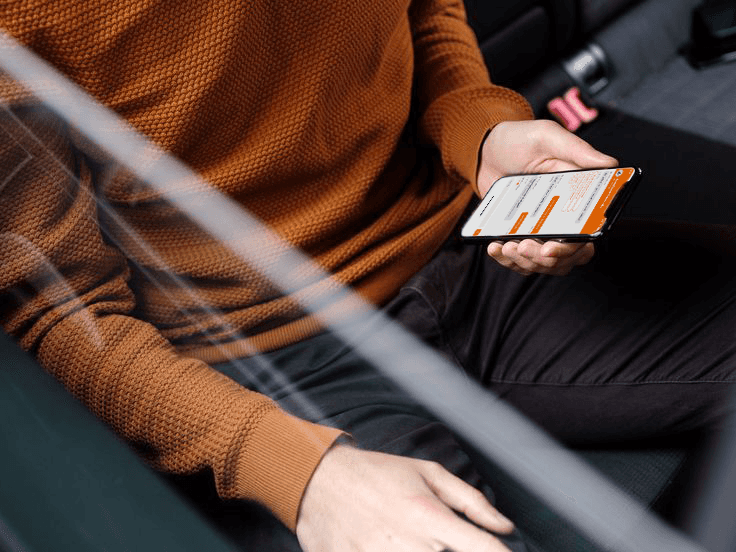

Rewards Chatbot
As an eCommerce Digital Design Intern at AutoZone, I identified a recurring operational problem: customer service representatives were spending hundreds of hours each quarter handling repetitive rewards inquiries that didn't require human support. I researched the highest call and email drivers, interviewed CSRs from the Mexico call center, and designed a Rewards chatbot in Dialogflow to automate those touchpoints. The solution was scoped to reduce call volume, lower Average Handle Time, and give loyalty customers faster access to their rewards information without picking up the phone. I presented the full concept and projected ROI to AutoZone leadership as my final intern pitch.



Southeast Arrow
AutoZone
During my E-Commerce Digital Design Internship at AutoZone, I focused on improving the digital shopping experience and streamlining customer support. My work spanned responsive interface design across mobile, tablet, and desktop, and a redesign of Product Detail Pages (PDPs) to improve usability and product visibility. The project featured here is a Rewards chatbot I designed and pitched to AutoZone leadership, built to reduce call volume and give loyalty customers faster, self-service access to their rewards. Some work remains confidential; what's shown here is either public or sufficiently anonymized.
digital design communication
Over the course of the internship, I designed responsive digital interfaces across mobile, tablet, and desktop, contributing to a more consistent and intuitive shopping experience site-wide. I also worked on a redesign of Product Detail Pages on AutoZone.com, focused on improving product visibility and reducing friction in the purchase path.
The most significant project I took on independently was the Rewards chatbot featured below. AutoZone's loyalty program is central to its customer relationship, but it was quietly creating friction. Customer service representatives were absorbing hundreds of repetitive rewards inquiries every quarter: balance checks, missing credits, account resets. These were low-complexity tasks consuming high-value support time. I saw an opportunity to design a solution that served both sides, giving customers faster answers and giving CSRs their time back for cases that actually needed them.